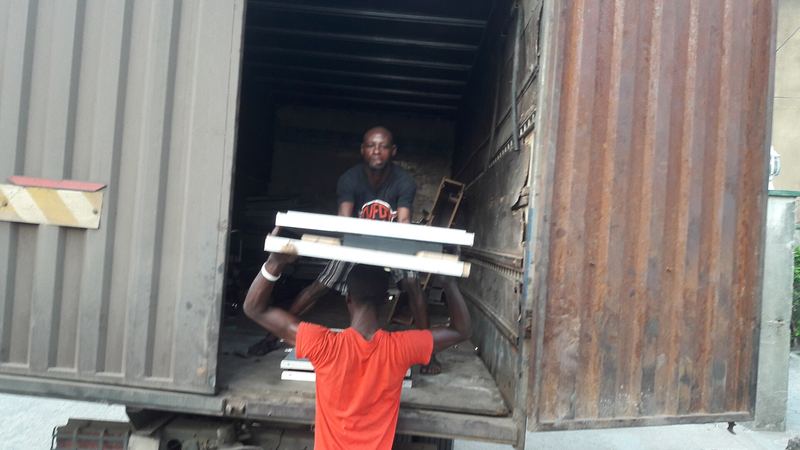
The farmers who buy from you do not care that the landlord has given notice. They want layers mash on Saturday morning, and they will drive to the next shop if your shutter is closed. A feed and agro-input store has to move fast, and it has to move heavy: sacks of feed, bags of fertiliser, drums of agro-chemicals and a weighing scale that must still read true at the other end.
The good news is that sacks are easy to load once you stop treating the move as one big pile.
Count by type before you count by weight
A week before the move, walk the store with a notebook. Write down each product, the sack size and how many you hold. Layers mash, broiler starter, fish feed, maize bran, NPK, urea, seeds, veterinary products: each gets its own line.
Sell down what you can. Half-used sacks leak, split and attract rats, so combine them or sell them first. A cleaner stock list also tells you what kind of vehicle you need, and our post on moving building materials without overloading the truck explains why weight, not space, is usually what decides it.
Keep feed, fertiliser and chemicals apart
Animal feed must never share a space with fertiliser or agro-chemicals. Spilt chemical on a feed sack can poison animals, and nobody will know until it is too late.
- Load feed on one side of the truck and fertiliser on the other, with tarpaulin between them.
- Keep drums and bottles of chemical upright, capped and tied, in their own corner.
- Wash or sweep any bed that carried chemicals before it carries feed.
Read the labels and follow the manufacturer's guidance on handling. If a product says keep dry or keep away from heat, the truck bed in the afternoon sun is not the place to forget that.
Prepare the new store first

Nobody wants to stack hundreds of sacks on bare ground. Before moving day:
- Sweep and dry the floor. Damp cement ruins the bottom row of sacks.
- Lay wooden pallets or planks so the first layer sits off the floor.
- Check for roof leaks, and see where the rain would get in.
- Set out the scale, the shelves and a clear walkway for customers.
If the new place is a lock-up with a narrow door, measure it. A truck that reaches the gate is no use if the loading point is fifty metres away.
Load heavy and flat, cover everything
Feed sacks often weigh around 25 kilograms and fertiliser bags are often heavier. Move them in a chain with two or three people, not one person with a sack on the head and a long walk.
- Put the heaviest sacks on the bed first, low and close to the cab wall.
- Stack in tight, crossed rows so the pile locks together.
- Keep the pile level. A tall, narrow stack is how sacks slide at a bend.
- Cover with a tarpaulin and tie it down, even if the sky looks clear.
Do not stand sacks on their ends. They lean, tear and spill. Our driver notes on securing a load with straps, ropes and tarpaulins cover the knots and tie-down points in more detail.
Ready to move?
Request a truck or van on Sphere
Choose your vehicle, propose your price, and verified drivers in Lagos, Abuja and Ibadan accept or send a counter-offer.
Move in the order you will sell
Customers keep coming through the move, so think about which stock leaves the old store last. Fast sellers such as layers mash and broiler feed stay put until the final trip. Slow lines go first. That way the old shop can keep trading until the last day, and the new shop opens with its best sellers already on the shelf.
For a store with 150 sacks or more, you will often need a truck or two trips with a pickup van. If you move a smaller stock, a pickup van is usually enough. The right size depends on weight, so state the number of sacks honestly when you describe the load.
Dust, rats and the last sweep
Feed stores are dusty. Wear a mask while loading, and wet the floor lightly before sweeping at the old place so the dust stays down. Check behind shelves for rodent droppings and clean both places properly. Leave the old store clean, because the landlord will check it before returning your deposit.
How to do this on Sphere
Open the Sphere app and choose a truck for a full store, or a pickup van for a small one. Add the pickup and drop-off, then describe the load plainly: "180 sacks of feed and fertiliser, 10 drums, 1 weighing scale, 4 shelving units". Say which products are chemicals and need their own space. Propose a price, and nearby verified drivers will accept or send counter-offers. Agree loading and offloading help with the driver before you accept.
Helpful pages: truck hire in Lagos and business moves in Lagos. Our post on relocating a hardware shop has similar advice for heavy stock.
Frequently asked questions
Can I move feed and fertiliser on the same truck?
Yes, if you keep them apart with a tarpaulin or a clear gap and never let chemicals touch feed sacks. If you can, use separate trips for feed and chemicals.
How should I load sacks on a truck?
Heavy sacks go low and close to the cab, laid flat in crossed rows. Cover the stack and tie it down.
Should I keep the store open during the move?
Often you can, if you move slow lines first and keep the best sellers until the last trip.
What if the new store floor is damp?
Do not stack on it. Dry the floor and lay pallets or planks first, or the bottom row of sacks will spoil.
Do I need a truck or a pickup van?
A large stock of sacks usually needs a truck because of the weight. A small store may fit a pickup van over one or two trips.
Request your move
Request a truck or van on Sphere
Choose your vehicle, propose your price, and verified drivers in Lagos, Abuja and Ibadan accept or send a counter-offer.
Get New Guides
Join Sphere's logistics insights list
New guides on moving homes, offices and business goods, sent to your inbox.