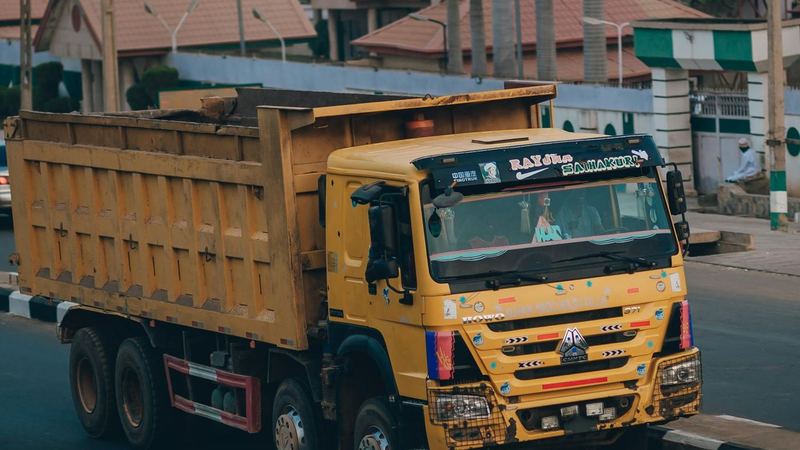
You are halfway across town with an open pickup when the sky turns grey. The tarpaulin you threw over the load at the last minute is flapping like a flag, one corner is already loose, and the customer's mattress is right underneath it. You can stop on the shoulder and fix it in the rain, or keep going and hope.
The real problem started back at the pickup. A load that shifts, falls or gets soaked costs the customer their goods and costs you time and goodwill. A load that falls onto the road can hurt somebody. Securing it properly takes a few extra minutes and a small kit.
The kit that lives in your vehicle
Keep these in the vehicle every day, not only when a job looks big:
- ratchet straps in a few different lengths
- strong rope for open-bed vehicles and odd-shaped loads
- a tarpaulin big enough to cover a full load with overlap, plus spare rope or bungee cords to hold it
- corner protectors made from cardboard, rubber or old hose
- blankets or old cloth to pad furniture and stop items rubbing
- gloves, because tightening straps all day tears up your hands
Look over your straps and ropes regularly. Anything frayed, cut, stiff or with a damaged buckle goes in the bin. Use every strap within its rated capacity and follow the manufacturer's guidance for it.
Load properly first
Straps are there to stop a stable load from moving. They should never be holding up a badly stacked pile.
- Heaviest items first and lowest, against the front wall behind the cab.
- Even weight from side to side.
- Tight packing. Fill gaps with soft items or cartons so nothing has room to slide.
- Tall items upright against a wall. Fridges and wardrobes stand, they do not lie down.
- Fragile items on top or in a protected corner, never under heavy boxes.
- Within capacity. Do not overload the vehicle past its rating.
If the load feels solid before the first strap, the hard part is done.
Tie-down basics
Ratchet straps
For most loads, ratchet straps hold tighter and more evenly than rope. Hook them onto proper anchor points, never onto trim or anything loose. Run each strap over or around the load so it pulls down and towards the front. Tighten until the load is firm, then stop, or you will crush cartons or crack a wardrobe panel. Tuck or tie off the loose ends so they do not flap or catch.
Rope
Use knots you can tie and untie reliably, not something you half remember. Tie off to fixed points such as hooks, rails or side posts. Pull the rope tight before you tie off, then check it again after a short distance, because rope settles.
How many tie-downs
There is no fixed number. Long or heavy items need more than one, and every separate item or stack needs holding. A common mistake is strapping only the back row and trusting everything in front to stay put. Strap each section of the load.
Protect what you are strapping
Straps and ropes can damage the very things they are holding. Put corner protectors anywhere a strap crosses an edge, especially on furniture, cartons and appliances. Pad polished surfaces with a blanket before the strap goes on. Do not run a strap directly over glass, screens or thin panels.
A dent from a strap is still damage, and it can turn a good job into an argument.
Drive with Sphere
Turn your truck or van into steady income
Accept move requests in Lagos, Abuja and Ibadan on your own schedule. Free to join, and you keep 90% of every job.
Tarpaulins and rain
An open-bed pickup van or truck gives the load no protection on its own, and rain can come quickly.
Cover the load before you leave the pickup, even when the sky looks clear, because doing it on a roadside is harder. Let the tarpaulin overlap the sides and tailgate so water runs off. Tie it down tightly at several points. A loose tarpaulin catches wind, flaps, and can tear or pull free.
If your vehicle bed collects water, put cartons on a raised surface or a sheet of plastic. Electronics and documents ride in the cab wherever possible.
Our guide to rainy season moves covers what customers can do on their side.
Check at every stop
Loads settle as you drive, and straps loosen. Check after the first few minutes on the road, once things have settled. Check at every stop, including fuel stops. Check again after rough roads, potholes or hard braking, and re-tighten straps or re-tie the tarpaulin as needed.
Only do this with the vehicle safely parked off the road. Never climb on a load, and never stand behind the vehicle in moving traffic.
What it does for your earnings
Customers choose between offers. A driver who delivers everything dry and undamaged builds a name for careful work, which tends to bring repeat jobs and referrals. It also means fewer stops, fewer disputes and nothing to replace. Our guide to driver habits that protect profit goes further on that.
How to do this on Sphere
- Read each request properly before you send an offer. Note anything fragile, tall or heavy.
- If something is unclear, ask the customer before you accept, so you bring the right straps and covers.
- Count the time for careful loading and securing when you decide whether to accept or counter.
- At the pickup, load and secure properly, then check again at every stop.
Drivers keep 90% of each job on Sphere. If you are not on the app yet, see how to drive and earn with Sphere.
Frequently asked questions
Are ratchet straps better than rope?
For most loads, yes. Ratchet straps hold more evenly and are easier to tighten. Rope still earns its place on open-bed vehicles, odd shapes and tarpaulins.
How often should I check a load during a trip?
After the first few minutes, at every stop and after any rough road. Only check when the vehicle is safely parked.
How do I stop straps damaging furniture?
Put corner protectors where straps cross edges, pad polished surfaces with blankets, and keep straps off glass and thin panels.
Do I need a tarpaulin if my vehicle has a closed body?
A closed van or box truck usually keeps the rain off. Carry a tarpaulin anyway for open-bed jobs and as a backup.
How do I join Sphere as a driver?
Download the driver app, then submit your licence, ID and vehicle details for approval. Joining is free.
Start driving
Turn your truck or van into steady income
Accept move requests in Lagos, Abuja and Ibadan on your own schedule. Free to join, and you keep 90% of every job.
Get New Guides
Join Sphere's logistics insights list
New guides on moving homes, offices and business goods, sent to your inbox.