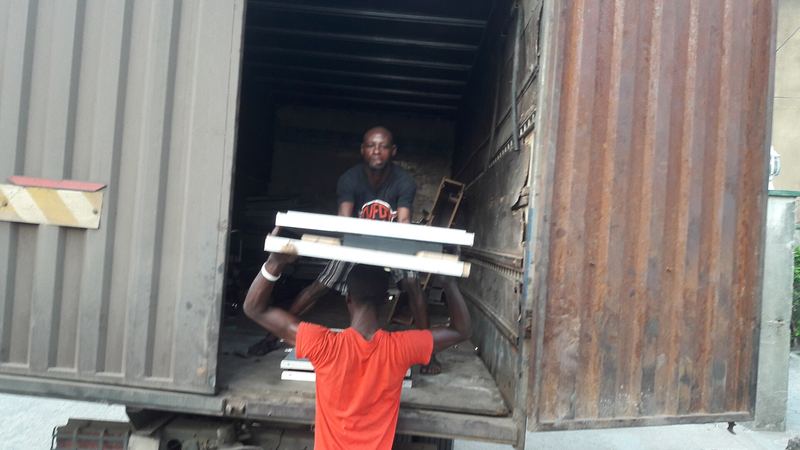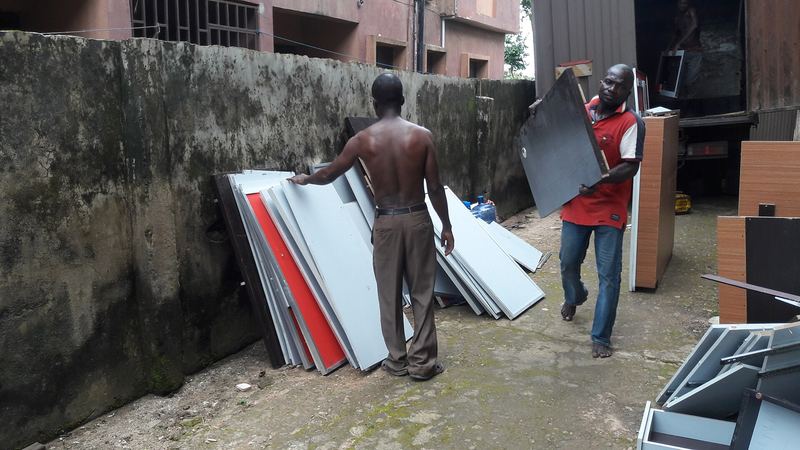
The shop is open until Saturday evening, the new unit is ready on Monday, and in between you have forty cartons of bulbs, a dozen drums of cable, a glass-fronted display of breakers and three chandeliers hanging from the ceiling. An electrical supplies shop is one of the few businesses where the lightest stock and the heaviest stock sit side by side.
Bulbs and tubes break. Cable drums crush whatever is under them. Put them in the wrong order and you open the new shop with a pile of glass dust and a bill.
Sort the shop into three loads
Before anyone lifts anything, split the stock into heavy, fragile and loose.
- Heavy: cable drums, conduit pipes, distribution boards, transformers, generators on display.
- Fragile: bulbs, tubes, chandeliers, glass shades, decorative lamps.
- Loose: sockets, switches, plugs, fuses, tapes, clips and anything small enough to get lost.
Each group gets its own space on the truck and its own people to handle it. Do not let the helper who is carrying drums also carry the bulbs.
Cable drums first, and low
A full drum of cable is far heavier than it looks, and it rolls. Roll drums only on a flat surface, never down a slope, and never let one person steer a drum alone. Our guide on lifting heavy items safely applies here, especially for helpers who are new to the work.
On the truck, stand drums on their flat side against the cab wall and wedge them with timber or sacks so they cannot turn. Short cut lengths can be coiled, tied with strong twine and stacked in a crate.
Tell the driver how many drums there are when you describe the load. A driver who expects a few boxes and finds twelve drums will either refuse or arrive in the wrong vehicle.
Bulbs, tubes and chandeliers

Keep bulbs and tubes in their original cartons. If a carton is damaged, repack the bulbs in a sturdy box with paper between layers and mark it fragile on two sides. Long tubes need to travel flat, not leaning against a wall.
Chandeliers and glass shades are better wrapped one by one. Take off any detachable crystals and pack them in a separate box, labelled with the chandelier they belong to. Our guide to moving ceiling fans, chandeliers and light fittings has the step-by-step for hanging pieces.
Carton the fragile stock yourself rather than leaving it to whoever is free on the day.
Breakers, boards and small parts
Distribution boards and meter boxes are heavy and have sharp corners. Wrap them in blankets and lay them flat. Breakers, fuses and sockets are small, so tape each tray or carton shut and label it. A tray of loose breakers tipped over in the truck will cost you an afternoon of sorting.
Do not carry old stock with live connections. If the shop has any display board still wired to the mains, have a qualified electrician disconnect it first and follow the manufacturer's guidance for any equipment that holds charge.
Ready to move?
Request a truck or van on Sphere
Choose your vehicle, propose your price, and verified drivers in Lagos, Abuja and Ibadan accept or send a counter-offer.
Take photographs before you strip the shelves
Photograph every shelf and wall display before taking anything down. The new shop can then be set up in the same order, which matters in a business where customers ask for a particular size of wire or a particular fitting and expect you to find it quickly. Our piece on making a moving inventory works well for shops too.
Plan the loading order
- Cable drums and heavy conduit at the front, against the cab wall.
- Boards, boxes of fittings and anything that can take weight above it.
- Cartons of bulbs and tubes in the middle, packed tight so they cannot slide.
- Chandeliers and glass shades last, held upright in blankets and not stacked under anything.
- Signboard, shelving and the counter in the space that is left.
Unload in the reverse order, so the fragile stock comes off first and goes straight onto the new shelves.
Choosing the vehicle
A small shop with mostly cartons can often go in a pickup van with one or two trips. A shop with drums, boards and shelving is a truck job. Read how to choose the right truck size if you are unsure.
How to do this on Sphere
Open the Sphere app and choose a truck or pickup van. Add the pickup and drop-off and describe the load in plain terms, for example "twelve cable drums, thirty cartons of bulbs, four distribution boards, three chandeliers and shop shelving". Propose a price. Nearby verified drivers accept it or send counter-offers, and you choose the one you want. Agree loading and offloading help with the driver before you accept an offer.
Useful pages: truck hire in Lagos and business moves in Lagos. If your shop is closer to hardware than lighting, read relocating a hardware shop.
Frequently asked questions
Can cable drums go in a pickup van?
Small drums can, if they are wedged so they cannot roll. A full set of drums is better on a truck.
How do I move bulbs without breaking them?
Keep them in their original cartons, stack them tight and put them where nothing heavy can sit on top.
Should I take down the chandeliers myself?
Only if the power is off and you know how they are fixed. Otherwise ask an electrician to take them down.
What should I tell the driver about the load?
Give counts: drums, cartons, boards and glass pieces. Mention anything that needs ramps or extra hands.
Can I keep the shop open while I move?
Usually yes. Move the heavy stock first, keep a small display open, and move the rest after closing.
Request your move
Request a truck or van on Sphere
Choose your vehicle, propose your price, and verified drivers in Lagos, Abuja and Ibadan accept or send a counter-offer.
Get New Guides
Join Sphere's logistics insights list
New guides on moving homes, offices and business goods, sent to your inbox.