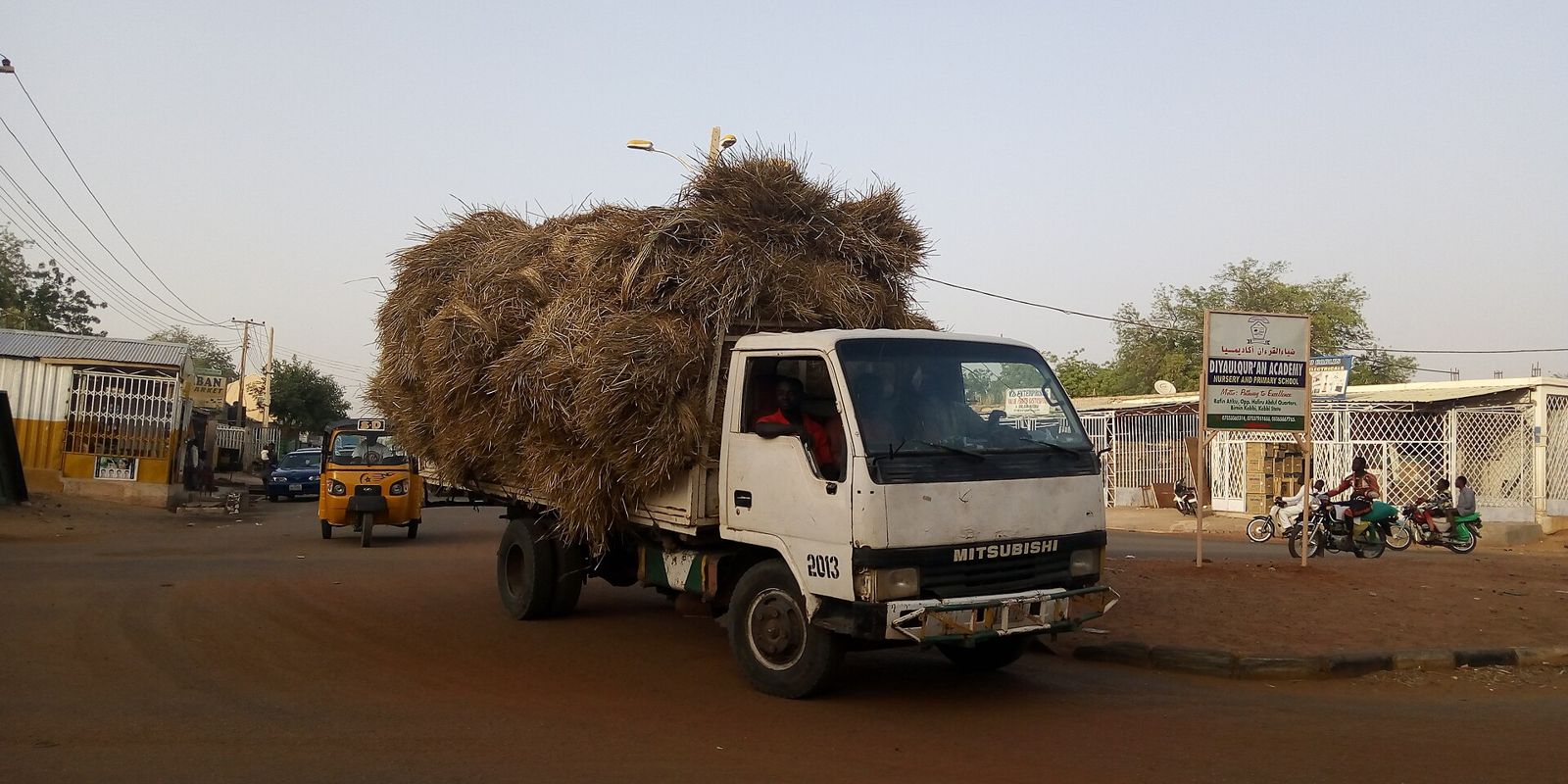
The site supervisor points at the pile. Cement, cartons of floor tiles, a bundle of iron rods and roofing sheets. "Carry everything in one go." The truck bed still looks half empty when the cement is on, but the springs are already sitting low.
That is the trap with building materials. They look small and they are very heavy. A load of cement and tiles can reach a vehicle's weight limit long before it fills the space. This guide is for customers sending materials to a site and for drivers carrying them.
Weight runs out before space
Furniture fills space. Building materials fill weight. A van full of sofas may be light. A van with a quarter of its floor covered in cement bags may already be at its limit.
On Sphere, the app lists a pickup van at up to 2,400kg and a truck at up to 27,000kg. Treat those as upper limits for a vehicle in good condition. Individual vehicles vary, so the driver should always follow their own vehicle's rated load.
Do the sum before anything is loaded:
- Cement: the weight is printed on each bag. Multiply it by the number of bags.
- Tiles: most cartons show the weight or the coverage on the side. Tiles are dense, and a short stack of cartons is heavier than it looks.
- Iron rods: check the supplier's invoice or ask the supplier for the total weight of the bundle.
- Roofing sheets: check the weight per bundle with the supplier.
- Blocks, sand and granite: very heavy for their size, and they are usually best delivered by suppliers with tipper trucks.
Add it all up. If the total is close to the vehicle's limit, split the load. Two safe trips are better than one overloaded trip.
Why overloading is dangerous
An overloaded vehicle takes longer to stop, steers poorly, heats up its brakes and wears its tyres and suspension fast. On Lagos roads with sudden stops, potholes and bridges, that is a real safety risk for the driver and everyone around the vehicle. It also damages the vehicle that earns the driver's living.
Drivers, if the customer's load is clearly heavier than the request described, say so before loading starts. Show them the sum. Most customers understand once they see the numbers.
Load heavy materials low and spread out

Heavy, dense items go on the floor, spread across the bed and kept forward, close to the cab and ahead of or over the rear axle.
- Put cement bags flat, in even layers, across the floor. Do not pile them in one tall heap at the back.
- Stand tile cartons on their edge, packed tightly together, so the tiles inside are less likely to crack.
- Keep tiles and cement apart if rain is possible. Wet cement is ruined cement.
- Fill gaps so nothing can slide when the vehicle brakes.
Our guide to loading a van or truck efficiently explains weight distribution in more detail.
Ready to move?
Request a truck or van on Sphere
Choose your vehicle, propose your price, and verified drivers in Lagos, Abuja and Ibadan accept or send a counter-offer.
Long loads: iron rods and roofing sheets
Iron rods and roofing sheets are often longer than the vehicle bed. That creates a different set of risks.
Choose a vehicle long enough to keep overhang to a minimum. If rods or sheets must stick out at the back, mark the end clearly with a bright cloth or flag so other road users can see it. Check what rules apply to overhanging loads where you are driving, and stay within them.
Tie the bundle firmly at more than one point so it cannot slide forward under braking. A bundle of rods sliding into the cab is one of the worst accidents a driver can have. Rods and sheets have sharp edges, so put padding where straps cross them, and wear gloves.
Roofing sheets catch wind like a sail. Lay them flat, weigh them down with heavier materials on top where it is safe, and strap them well. Loose sheets have flown off moving trucks.
See our guide to securing a load with straps, ropes and tarpaulins for tie-down methods.
Rain and building sites
Cement and some materials do not tolerate water. Carry a tarpaulin and cover the load before rain starts, not after. At the site, offload onto pallets or planks, not straight onto wet ground.
Building sites are often muddy, unpaved or blocked by other moves. Customers, tell the driver about the site access in the request: road surface, gate width and where to park.
How to do this on Sphere
- Open the Sphere app and choose a pickup van for smaller loads or a truck for bigger or longer ones. See van hire and truck hire in Lagos.
- Add the supplier or store address and the site address.
- Describe the load with quantities and total weight: number of cement bags, tile cartons, length of rods and number of roofing sheets.
- Agree loading and offloading help with the driver before you accept an offer.
- Propose your price. Verified drivers accept it or counter, and you choose.
An honest load description helps drivers decide quickly and safely. Sphere works in Lagos, Abuja and Ibadan.
Frequently asked questions
How do I know if my load is too heavy for a pickup van?
Add up the weight of every item using the bag, carton and supplier figures. The app lists a pickup van at up to 2,400kg, so if your total is near that, request a truck or split the load.
Can iron rods stick out of the back of the truck?
Keep overhang to a minimum by choosing a long enough vehicle. If some overhang cannot be avoided, mark it clearly and check what rules apply where you are driving.
Should cement and tiles go on the same trip?
They can, if the total weight is within the vehicle's limit and the cement is kept dry. Spread both low across the floor.
What should a driver do if the load is heavier than described?
Raise it with the customer before loading starts and show the weight. Agree a second trip or a bigger vehicle instead of overloading.
How do I stop roofing sheets blowing off?
Lay them flat, strap them firmly at several points and keep heavier materials on top where it is safe to do so.
Request your move
Request a truck or van on Sphere
Choose your vehicle, propose your price, and verified drivers in Lagos, Abuja and Ibadan accept or send a counter-offer.
Get New Guides
Join Sphere's logistics insights list
New guides on moving homes, offices and business goods, sent to your inbox.