A hardware shop is the hardest kind of stock to move, because no two items are alike. Bags of cement sit next to a roll of wire, a rack of door locks, twenty tins of paint and a bundle of six-metre pipes that nobody can carry round a corner. The new shop has been rented, the old landlord wants the keys, and customers keep walking in while you pack.
The good news is that hardware is mostly sturdy. It rarely breaks. It is heavy, awkward and easy to mix up, so the work is in sorting, counting and loading order.
Start by sorting the shop into five groups
Walk the shop with pen and paper and put every shelf into one of these groups.
- Heavy and dense: cement, tiles, bags of nails, rolls of cable, tools.
- Long: pipes, iron rods, planks, roofing sheets, ladders.
- Liquid and messy: paint, thinner, adhesive, oil, sealant.
- Small and loose: screws, hinges, locks, fuses, switches, bulbs.
- Fragile or valuable: sanitary ware, glass, light fittings, power tools.
Each group is packed differently, and each goes in a different part of the vehicle. Sorting also tells you what to sell down before the move. Selling a few awkward items cheaply is often better than carrying them across town.
Packing each group
- Cement: keep bags dry and stack them flat. Do not mix them into the main load until the last minute if you can avoid it, because a torn bag dusts everything.
- Paint and thinner: check every lid is tight, stand tins upright in cartons, and keep them away from sunlight and the engine side. Do not stack heavy items on top. Follow the manufacturer's guidance for flammable products.
- Pipes and rods: tie bundles at both ends and in the middle, put a rag or red cloth on the overhang, and load them lengthways along one side.
- Small items: use sturdy boxes or crates, one category per box, with a label on the top and the side. This is where a shop loses money if boxes burst.
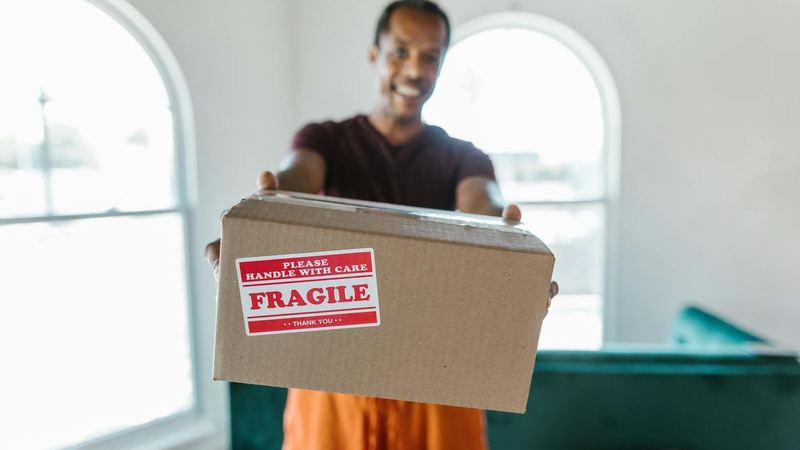
- Sanitary ware, glass and light fittings: wrap each piece in foam or newspaper and pack it in an upright carton. Our guide to packing fragile items for same-day moves has the details.
- Power tools: put them in their cases, and keep the chargers with them.
The stock count nobody wants to do

Count before you pack, not after you unpack. A simple list of what each box holds, with a quantity, is enough. At the new shop, tick the boxes off as they come off the truck. If one is missing, you know within the hour, not in a month when a customer asks for an item.
If you also keep a record of customers who owe you, move it yourself. It stays with you in the car, with the cash box and the shop documents.
Choosing the vehicle
Hardware is heavy, so weight matters more than volume. A pickup van is often fine for a small shop or a store room, but a shop with a lot of cement, tiles or metal needs a truck. Read how to choose the right truck size and compare your heaviest items to the vehicle capacity in the app. Do not load beyond what the driver says is safe, and see our post on moving building materials without overloading the truck for the weight checks.
Two trips are often better than one overloaded trip. A sensible split is long and heavy stock in the first run, and the small and fragile items in the second.
Ready to move?
Request a truck or van on Sphere
Choose your vehicle, propose your price, and verified drivers in Lagos, Abuja and Ibadan accept or send a counter-offer.
The loading order
- Heavy bags and cartons at the front, flat on the bed.
- Pipes and rods along one side, tied down.
- Paint and liquids upright in a corner, boxed in so they cannot tip.
- Small boxes and crates in the middle, in stable stacks.
- Fragile cartons and light fittings on top, or in the cab area.
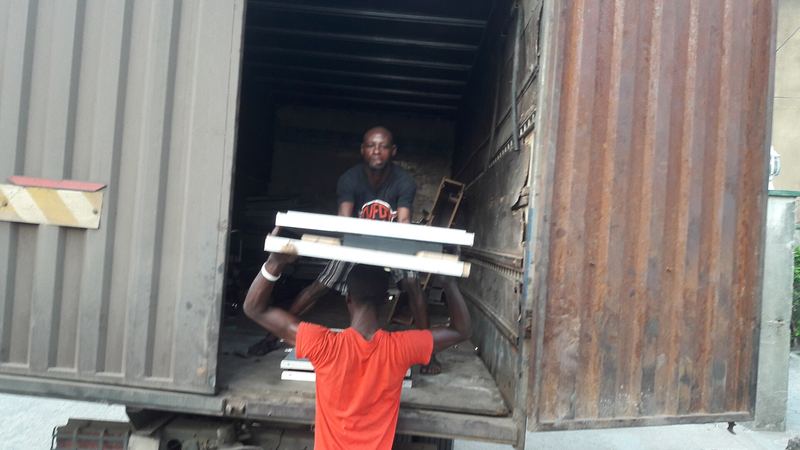
At the new shop, unload in the reverse order and place heavy stock on the floor or low shelves first. It is tempting to put everything on the shelves, but you will pay for it with a collapsed rack.
Staying open while you move
If the shop earns every day, do not close for a week. Move the back room first, keep a small selection of fast-selling items at the old shop, and move them last. Our guide on moving a shop overnight in Lagos shows how to close late and open on time.
How to do this on Sphere
Open the app and choose a truck or a pickup van, then add the pickup and drop-off. In the description, list the heavy items (for example cement bags, tiles, rods) and the long ones, and mention stairs or a narrow shop front. Propose your price. Nearby verified drivers accept or send counter-offers, and you choose the one you want. Agree loading and offloading help with the driver before you accept an offer, because bags of cement are tiring to lift. For more, see business moves in Lagos.
Frequently asked questions
Should I move cement in the same load as paint?
It is better to keep them apart. A split paint tin can ruin cement bags, and a torn cement bag dusts everything. Use separate corners with a barrier of boxes between them.
How do I carry long pipes on a truck?
Tie the bundle in several places, load it lengthways along one side, and mark the overhang with a bright cloth. Ask the driver where the pipes should sit.
Can I move a hardware shop in one day?
A small shop often can be moved in a day if sorting and labelling are done beforehand. A large shop with heavy stock may need two trips or two days.
What should I carry myself?
Cash, your sales and debt records, shop documents, small valuables and anything easy to pick up and sell. Keep them with you in your own car.
How do I avoid losing stock during the move?
Count and label each box before packing, and tick them off at the new shop as they come off the truck.
Request your move
Request a truck or van on Sphere
Choose your vehicle, propose your price, and verified drivers in Lagos, Abuja and Ibadan accept or send a counter-offer.
Get New Guides
Join Sphere's logistics insights list
New guides on moving homes, offices and business goods, sent to your inbox.