Everything is already at the gate when you pull up. A fridge, a standing fan, a wardrobe in pieces, a mattress, twelve cartons and one box with FRAGILE written across it in red marker. There are two drop-offs. The customer's younger brother is ready to start throwing things in the back.
Stop him. The next ten minutes decide whether this job ends well or with a cracked mirror and an argument at the second stop. A well-loaded vehicle brakes and steers better, unloads faster and arrives with fewer damaged items.
Before anything goes in
Walk the pickup and look at the whole load before the first item moves. Open the job in the app and check the item list, the drop-off points and any notes from the customer. If there is more than one stop, confirm the drop order with the customer now.
Then check your own vehicle. The floor should be clean and dry, straps and blankets ready, tie-down points working and the rear doors or tailgate secure.
If the load is clearly bigger or heavier than the request described, raise it with the customer before you start.
Heavy items low and forward
The heaviest items go on the floor, never on top of anything else. Push them towards the front, against the cab bulkhead and over or just ahead of the rear axle. Weight hanging far behind the rear axle can make the steering feel light and less responsive.
In practice, fridges, washing machines, generators and boxes of books usually go in first, against the front wall. For specific heavy items, follow the manufacturer's guidance. Fridges, for example, are usually best kept upright, and our guide to moving a fridge or freezer goes into detail.
Balance side to side
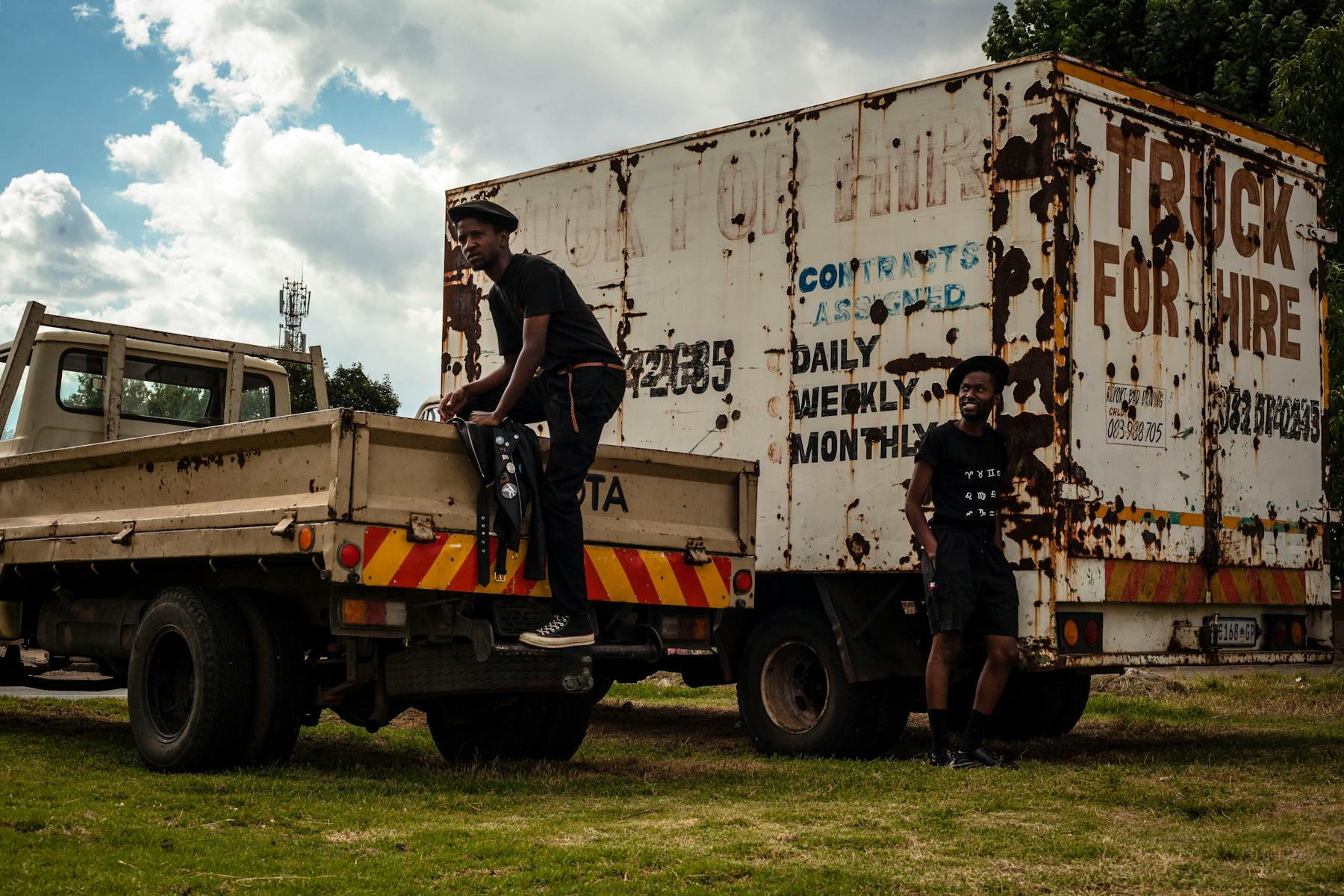
A load that is heavy on one side makes the vehicle lean and can affect the tyres and braking. Spread heavy items across the width of the floor. With two heavy pieces, put one on each side. Then pack medium boxes into the gaps between them so nothing can slide sideways.
Build it like a wall
Think of the load as a wall you build from the front of the cargo area towards the doors, one section at a time.
- Bottom layer: heavy, solid items with flat tops.
- Middle layer: medium boxes and sturdy furniture.
- Top layer: light boxes, cushions, bags and soft things.
- Gaps: filled with blankets, pillows or soft bags so nothing can move.
Strap off each section before you start the next. If you have to brake hard on the expressway, one section will not push into the one in front of it.
Multi-drop jobs: last off, first in
When a job has more than one drop-off, the items for the final stop go in first, at the front. Items for the first stop go in last, near the doors. Keep each stop's items together in one section. A carton for stop two buried under stop one's furniture means unloading half the van on the roadside.
Sometimes this clashes with keeping heavy items forward. When it does, safety wins. Keep heavy items low and strapped, even if it means a bit more shifting at a stop. Mark where one stop's section ends and the next begins, with tape or a note, so you are not guessing later.
Drive with Sphere
Turn your truck or van into steady income
Accept move requests in Lagos, Abuja and Ibadan on your own schedule. Free to join, and you keep 90% of every job.
Fragile items
Ask the customer which boxes are fragile before anything goes in. Those boxes go on the top layer or in a secure space of their own, with nothing stacked on them.
- Glass and mirrors travel on their edge, wrapped, and strapped against a side wall. Never lay them flat with weight on top.
- Put blankets between furniture surfaces so they do not scratch each other on bad roads.
- Keep electronics upright, well away from anything that could fall on them.
Fill the space, never overload
- Rated capacity. Never exceed it. On the Sphere app, pickup vans are listed up to 2,400kg and trucks up to 27,000kg, but what matters on the day is your own vehicle's rated payload. Follow the manufacturer's guidance.
- Rear doors. Nothing should lean against the doors or tailgate. They can burst open on the road, or the item falls on someone when the doors are opened.
- Open trucks. Keep the load below roof height and secure it with proper straps or a net. Rope alone is not enough.
- Visibility. Your mirrors must stay clear.
If the load will not fit safely in one trip, tell the customer and agree a second trip. Do not overload to save a trip.
Before you drive off
Walk round the vehicle and check every strap. Push on the load with your hands. If anything moves, fix it now. Close the doors, lock them and test them.
After the first few kilometres, pull over where it is safe and check again. Straps often loosen as the load settles.
How to do this on Sphere
When a request comes in on the Sphere driver app, read the item list carefully and accept or send a counter-offer that reflects the real work, including any loading help the customer has asked for. Our guide to counter-offers that win jobs explains how to price it.
Drivers keep 90% of each job, and joining is free. Not driving with Sphere yet? Apply through the drive and earn page.
Frequently asked questions
Where should the heaviest items go in a van?
On the floor, towards the front near the cab, and spread across the width. Never stack heavy items on top of lighter ones.
What is the right loading order for multiple drop-offs?
Last off, first in. The final stop's items go in first at the front, the first stop's items go in last near the doors, and each stop's items stay together.
How do I stop items shifting while driving?
Build the load in tight layers, fill the gaps with soft items and strap off each section. Check the straps again after the first few kilometres.
Can I carry more than my vehicle's rated capacity if it fits?
No. Never go over your vehicle's rated payload, however much space is left. Agree a second trip with the customer instead.
Should glass and mirrors be laid flat?
No. Wrap them and carry them on their edge, strapped against a side wall, with nothing pressing on them.
Start driving
Turn your truck or van into steady income
Accept move requests in Lagos, Abuja and Ibadan on your own schedule. Free to join, and you keep 90% of every job.
Get New Guides
Join Sphere's logistics insights list
New guides on moving homes, offices and business goods, sent to your inbox.