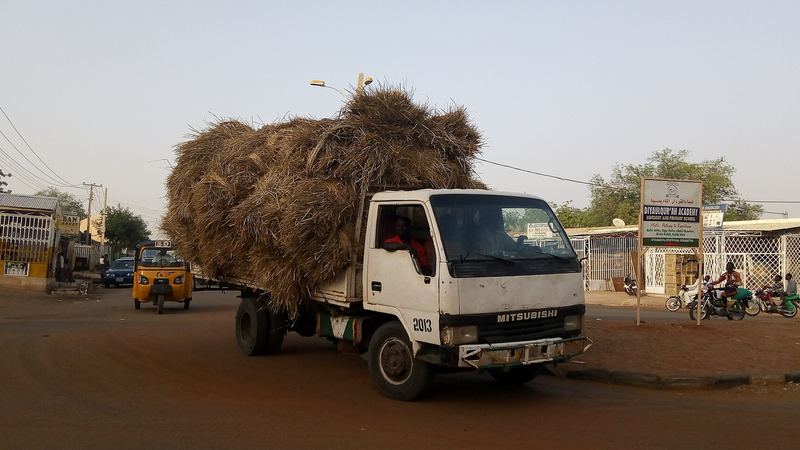
The engine coughs on the Ikorodu road, the temperature needle is in the red, and the truck rolls to a stop with a customer's whole sitting room on the back. Every driver who works long enough meets this day. How you handle the next twenty minutes decides whether the customer talks about you kindly or not.
This guide is for drivers, and customers can read it to know what a good response looks like.
First, make the spot safe
Before you open the bonnet, protect yourself and the load.
- Pull as far off the carriageway as you can. If you cannot move, switch on the hazard lights.
- Place a warning triangle or a branch behind the truck if you carry one, far enough back for a driver to see it in time.
- Do not stand between your truck and traffic. Stay on the verge or behind a barrier.
- Switch off the engine if there is smoke, a fuel smell or a burning smell, and keep people away from it.
Never open a radiator cap on a hot engine. Let it cool first. If you are unsure about a fault, follow the manufacturer's guidance and your mechanic's advice.
Call the customer early, not late
Many drivers wait until they have a fix before calling, hoping to say "it is sorted". Do the opposite. The customer is sitting in an empty flat or waiting at a new place with workers, and silence feels worse than bad news.
Call as soon as the truck is safe. Say what happened in plain words, where you are, and when you will update them next. Something like: "The truck has stopped at Ojota. I am checking it now, and I will call you in twenty minutes with a clearer picture."
Then do call again at the time you promised, even if you have nothing new. Our note on calling the customer before pickup applies in the same way here.
Protect the load while you wait

A stopped truck on a busy road is a risk to the goods too.
- Check the straps and covers. A truck that lurched to a stop may have moved the load. Re-tighten anything loose.
- Cover the load. If rain is forming, get the tarpaulin on before the first drops.
- Stay with the vehicle. Do not leave a loaded truck unattended on a roadside, especially at night.
- Take photos. Photograph the load as it stands. It shows its condition at the time of the breakdown. See our guide on photographing the load.
- Keep valuables out of sight. Do not leave small, easily lifted items visible.
Do not unload on the roadside unless you have to, because a load put on the ground is harder to re-secure, and it exposes goods to dust, rain and theft.
Work out the real problem
Be honest about what you are looking at, because it decides the next step.
- A quick fix you can do safely, like a loose cable, a puncture or a coolant top-up. Tell the customer the extra time.
- A fix that needs a mechanic. Ask how long it will take and whether the mechanic can come to you.
- A fix that will take hours or cannot be done today. Say so early, so the customer can plan.
If you are not sure, say that too. A guess of "twenty minutes" that turns into three hours loses trust fast.
Ready to move?
Request a truck or van on Sphere
Choose your vehicle, propose your price, and verified drivers in Lagos, Abuja and Ibadan accept or send a counter-offer.
Agree the next step with the customer
When it will take more than a short while, give the customer options and let them choose.
- Wait while the truck is fixed.
- Transfer the load to another vehicle. This is only realistic if you can find one nearby, and if you can get helpers at the roadside. It needs the customer's agreement, and any new driver's too.
- Finish the job later, if the load can be kept safe and the customer agrees.
Be clear about who arranges what. Do not promise another truck unless you can actually get one. If a transfer involves a second driver, agree with the customer beforehand how the price is handled. Do not make that call alone.
What the customer should do
If you are the customer and your driver calls to say the truck has broken down:
- Stay calm and ask where they are and what the plan is.
- Ask about the load: is it covered, strapped and safe?
- Decide how long you can wait, and say it clearly.
- Do not rush the driver into unsafe repairs.
- If you want to take the load to another vehicle, discuss it with the driver and agree on it together.
Our guide on when a move goes wrong has more on resolving it fairly.
Prevent it where you can
Most breakdowns have warnings. Check tyres, oil, water, fan belts and brakes before the week begins, and do not take a long job with a truck that has been complaining. Habits like these are what protect your weekly work, and you will find more in our piece on fuel, maintenance and route discipline.
How this works on Sphere
On Sphere, customers request a truck or van and drivers accept or counter the customer's price. Once you have accepted, the customer is relying on you. Drivers who want to earn steadily on Sphere can start at Drive and earn.
If a breakdown happens mid-job, keep the customer informed through the phone number you already have, and agree the next step with them before you act. Reach out to Sphere for help if you need it.
Frequently asked questions
Should I call the customer immediately after a breakdown?
Yes, once the truck and you are safe. An early call, even without a fix, is better than a long silence.
Can I unload the customer's goods on the roadside?
Avoid it unless you must. A load on the ground is harder to protect from rain, dust and theft, and harder to re-secure.
What if I cannot fix the truck today?
Tell the customer straight away so they can plan. Discuss options such as moving the load to another vehicle, and agree before you act.
Who pays for a replacement vehicle?
That has to be agreed between you and the customer before it happens. Do not promise anything you have not settled.
How can I reduce the chance of a breakdown on a job?
Check tyres, oil, water, belts and brakes regularly, and avoid taking long jobs in a truck that is already giving warning signs.
Request your move
Request a truck or van on Sphere
Choose your vehicle, propose your price, and verified drivers in Lagos, Abuja and Ibadan accept or send a counter-offer.
Get New Guides
Join Sphere's logistics insights list
New guides on moving homes, offices and business goods, sent to your inbox.